


When most people hear social studies, they think of maps, dates, and historical events. When I hear social studies, I also think about engineers, designers, artists, and innovators—all the people who imagined new solutions to the challenges of their time.
.png)
When most people hear social studies, they think of maps, dates, and historical events. When I hear social studies, I also think about engineers, designers, artists, and innovators—all the people who imagined new solutions to the challenges of their time.
That’s why, in my 8th-grade social studies classroom at FSA, S.T.E.A.M. is not a “special project” we do once a year. It’s a daily way of thinking:
How did people in the past solve problems?
What tools and technologies did they invent?
How can we apply that same creativity to the problems we face today?
Additionally, my work as the middle school Future City coach and our students’ success in the competition has given me a unique lens for connecting STEAM with history, geography, and civics. Together, these experiences help me design learning that is hands-on, rigorous, and deeply meaningful for students.
Exploring STEAM Through History: A Signature 8th Grade Social Studies Project
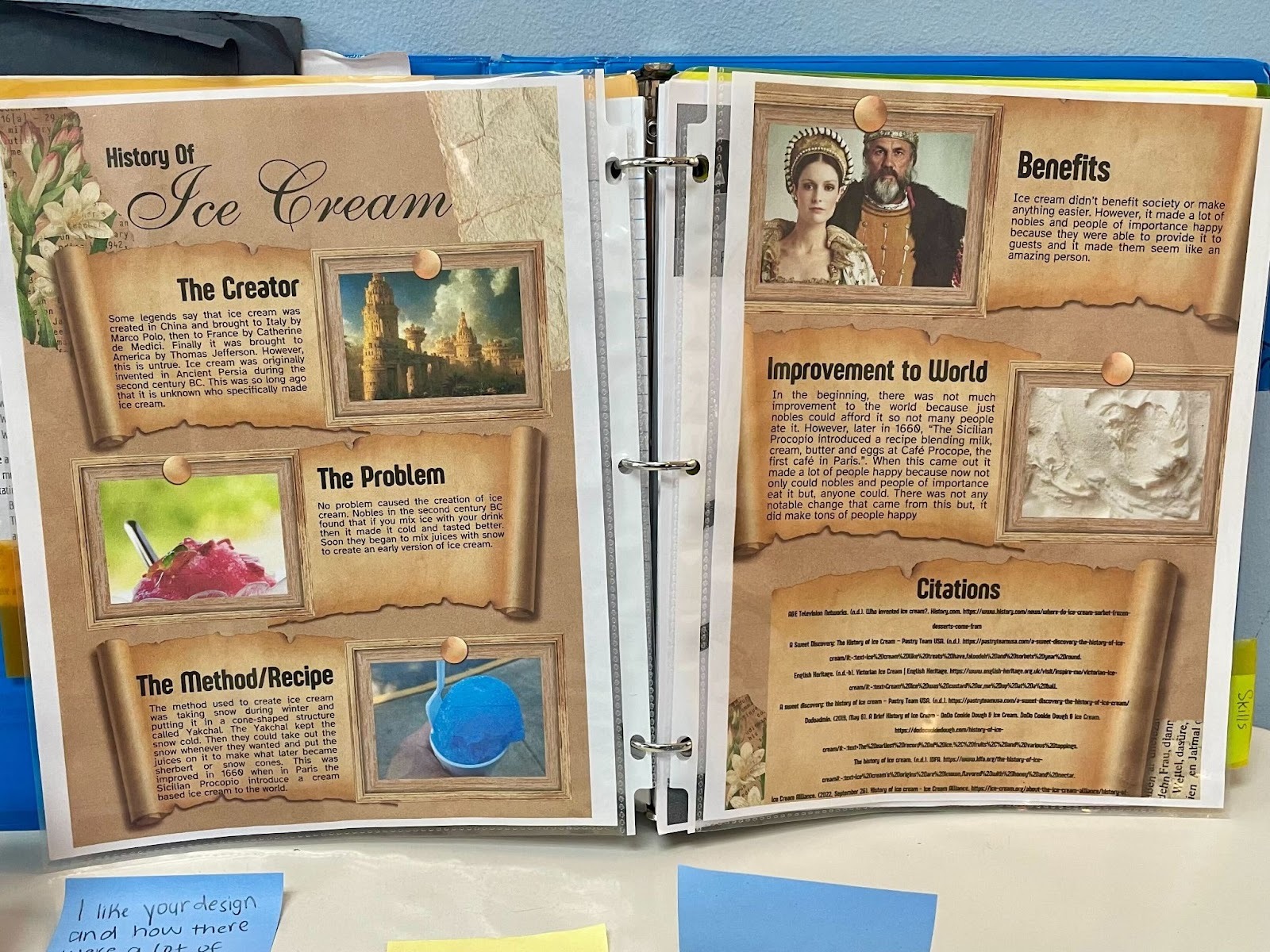
One of my favorite ways to integrate S.T.E.A.M. into social studies is our “Exploring S.T.E.A.M. Through History” project. In this project, students investigate an obscure or lesser-known innovation, not the usual telescope, steam engine, or telephone, and trace its impact from the past to the present.
Students can work independently or in small groups, and they choose a topic that fits into one of the S.T.E.A.M. domains, such as:
- A scientific discovery
- A technological or engineering innovation
- A movement in the arts
- A mathematical concept
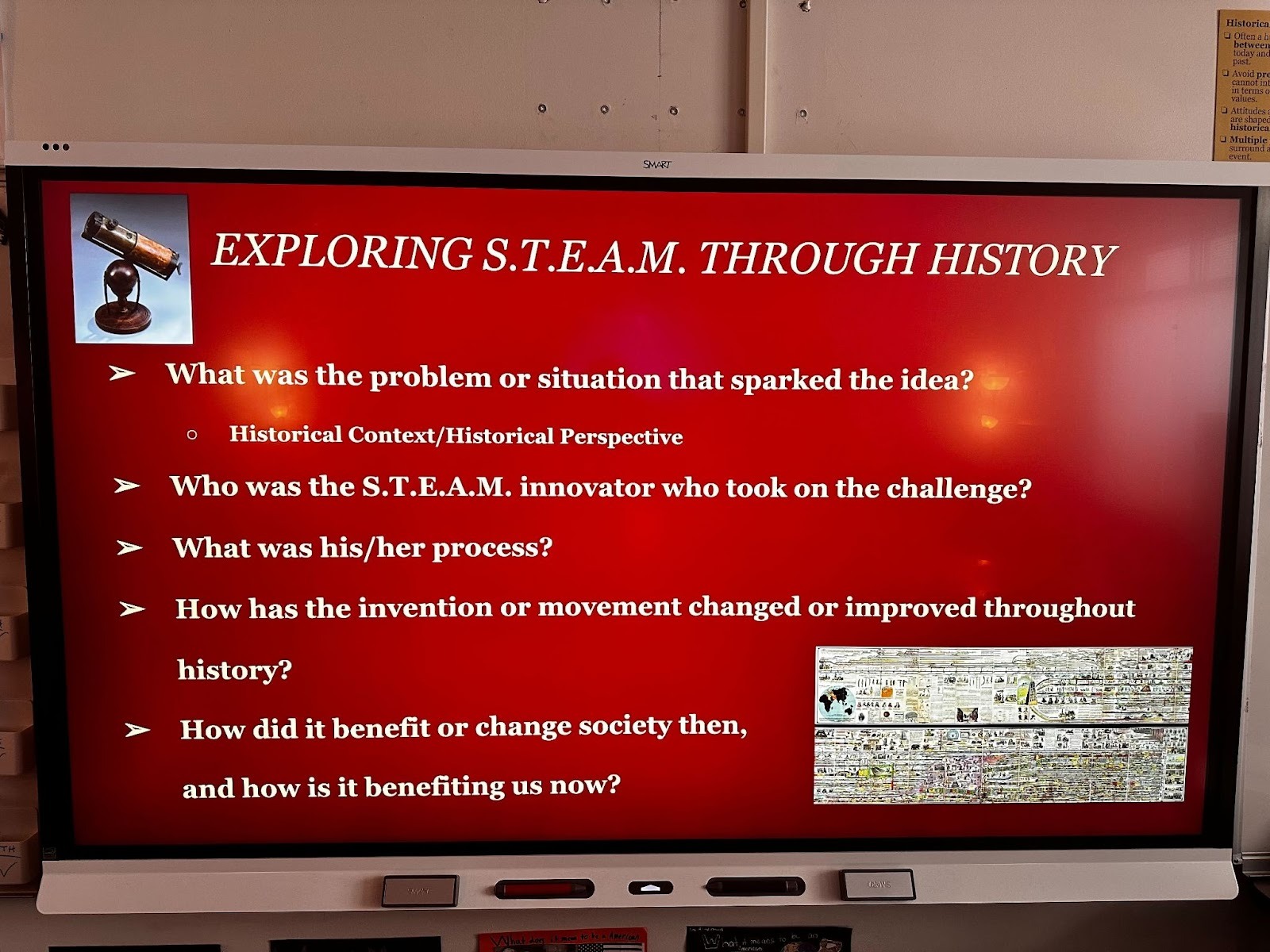
From there, they construct a historical “story” of that innovation by answering key questions:
- What problem or situation sparked the idea?
- Here, students explore the historical context—What was happening in society at the time? What needs or crises existed?
- Who was the S.T.E.A.M. innovator?
- Students learn about the people behind the idea—often individuals who were under-recognized or marginalized in traditional historical narratives.
- What was their method? Did they use something like the Engineering Design Process?
- We talk about how innovators brainstormed, tested, failed, and tried again—similar to what engineers do today.
- How did the innovation change over time?
- How did it benefit society then, and how is it still influencing our world today?
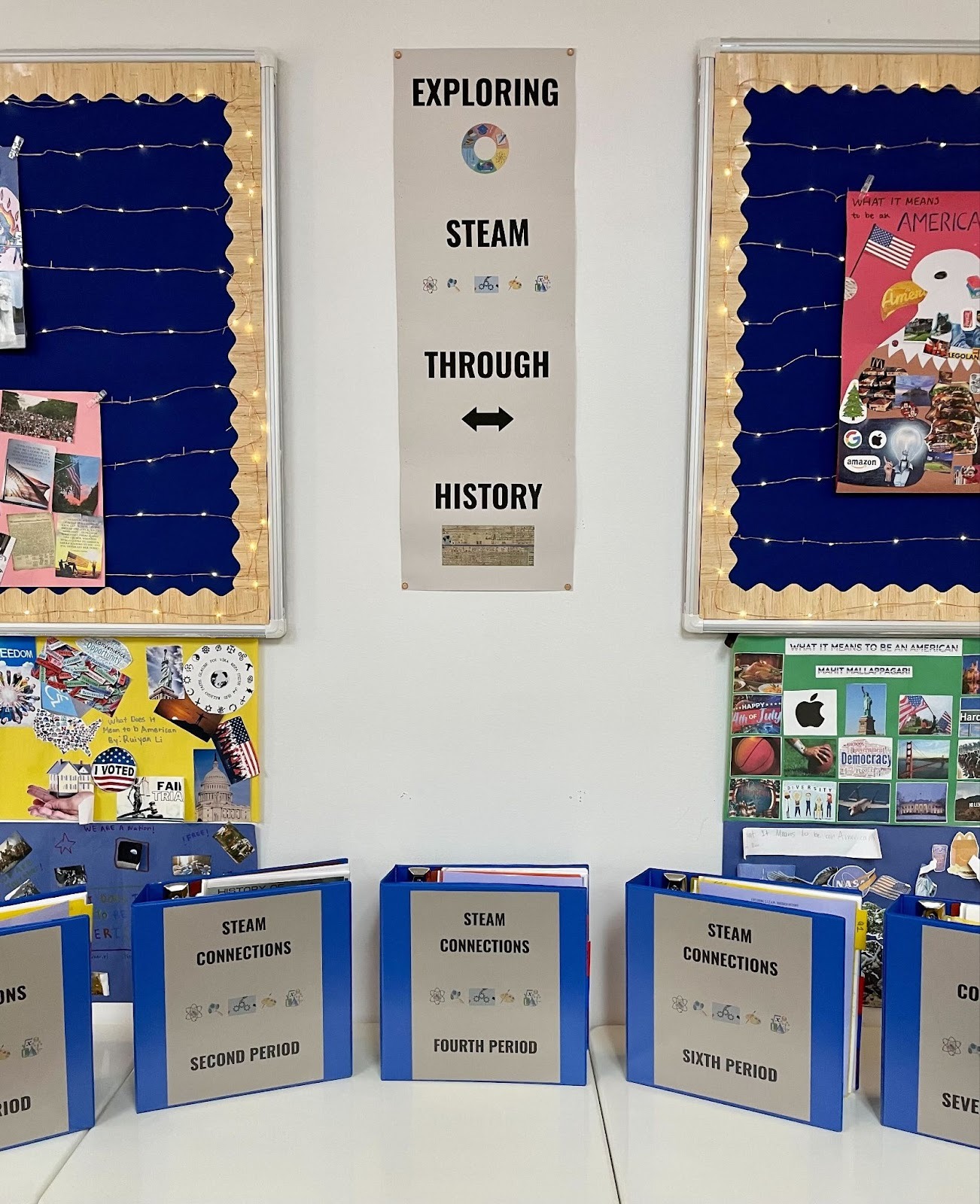
Students then design a 3-5 minute presentation for an imagined audience of visitors who “have no idea how S.T.E.A.M. connects to social studies.” They can present through Canva, Google Slides, PowerPoint, project boards, or even skits, building both communication and creativity.
To support academic integrity and research skills, students must:
- Cite their sources in APA format, and
- Summarize in their own words—no AI, no copy-and-paste.
This is incredibly important to me. I want our students to think, analyze, and synthesize, not just collect information. By “teaching the story” of their innovation back to the class, they see themselves as historians and problem solvers.
Future City: Where Social Studies Meets Engineering
Outside the regular classroom, I coach our Future City middle school teams, an international engineering competition where students imagine, research, design, and build cities of the future. The program combines the engineering design process with project management and cross-curricular learning, allowing students to tackle real-world sustainability challenges in a hands-on way.
Future City asks students to:
- Identify a citywide problem (such as energy, food systems, transportation, or climate resilience)
- Research the issue in depth
- Design a futuristic city that solves that problem
- Build a physical model using mostly recycled materials
- Present their ideas to a panel of judges, explaining the science, engineering, and social impact behind their designs
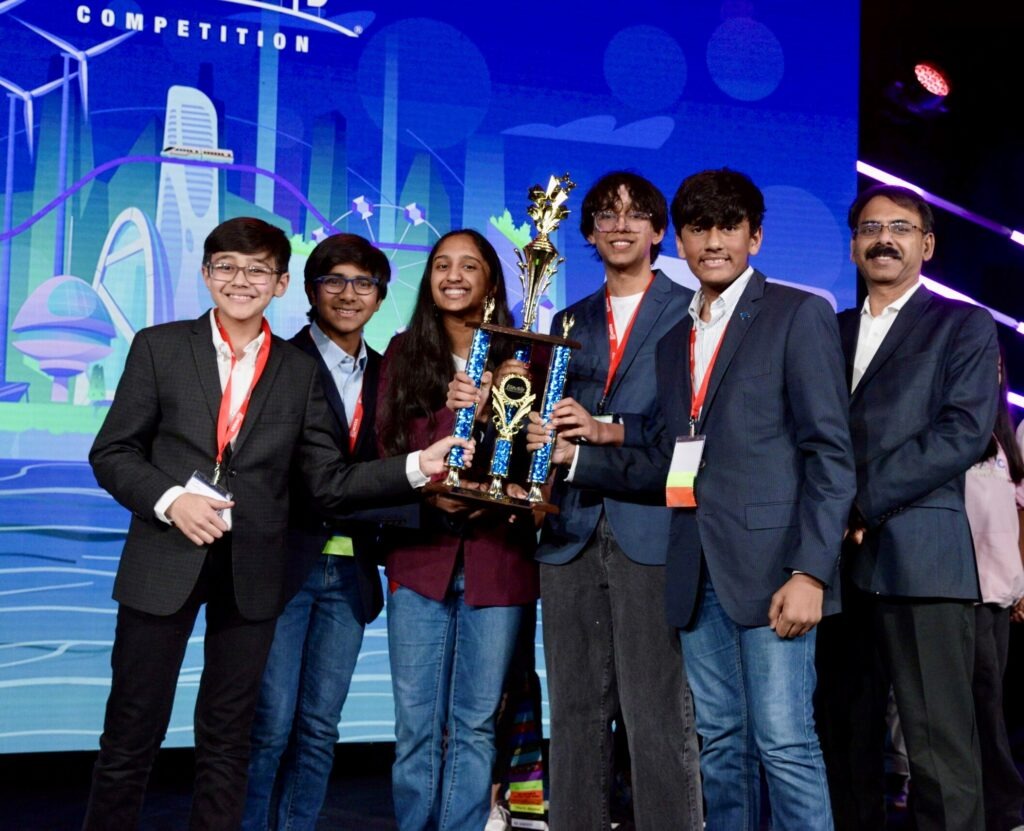
Last year, our FSA Future City teams had an extraordinary run:
- 1st, 2nd, 4th, and 9th place in the Regional Competition
- 4th place at the International Competition in Washington, D.C.
These results are impressive, but what matters most to me is how students grow through the process:
- They practice systems thinking, considering transportation, education, environment, economy, and culture simultaneously.
- They apply math and science concepts to authentic design challenges.
- They develop communication, collaboration, and leadership skills as they present to expert judges.
Future City is not separate from my social studies teaching—it deepens it.
How Future City Shapes My Social Studies Classroom
Serving as a Future City coach has strengthened my approach to teaching social studies through a STEAM lens. Working closely with students who engage in inquiry, problem-solving, and iterative thinking has given me a clearer understanding of how those same habits can support deeper learning in my core classroom.
Because of this experience, I naturally plan lessons that emphasize:
- Inquiry-based exploration rather than memorization
- Problem identification and analysis when examining historical events
- Evidence-based reasoning when evaluating decisions of leaders or societies
- Student-led questioning, reflection, and collaboration
Coaching Future City has shown me how capable students are when they are given open-ended questions and meaningful challenges. As a result, my social studies classroom focuses more on:
- Asking students to uncover the “why” behind historical challenges
- Guiding them to explore multiple perspectives or solutions
- Encouraging them to make connections across disciplines, including science, technology, economics, environment, and civics
- Helping them see historical decisions as part of a larger system
This S.T.E.A.M.-aligned approach helps students view history not as isolated facts, but as a dynamic process shaped by human problem-solving, innovation, and change. It allows them to think more critically and creatively, while also building their confidence and curiosity.
Cultivating STEAM Thinking and Student Voice
My ultimate goal is not just to “add S.T.E.A.M. projects” to social studies, but to cultivate S.T.E.A.M. thinking in every student:
- Curiosity: Why did this problem exist in the first place?
- Creativity: What new solutions can we imagine?
- Critical thinking: Who benefited from this decision? Who was left out?
- Empathy: How did these innovations affect different groups of people?
- Confidence: Can I be an innovator, too?
Through “Exploring S.T.E.A.M. Through History”, students practice researching, questioning, and presenting their ideas clearly and ethically, and through Future City, students test their ideas in a highly competitive, real-world environment—collaborating with teammates, meeting tough deadlines, and presenting to professionals.
Together, these experiences help students see themselves not only as learners of history, but as future changemakers who can design a better, more sustainable, and more just world—no matter which paths or professions they ultimately pursue.
Author Biography
Frances Hunnicutt is the eighth-grade American Studies teacher at Fulton Science Academy Private School in Alpharetta, Georgia. She holds a Master of Education degree, endorsements in STEM and gifted education, and certifications in social studies and history for grades 6-12. She provides her students with strong foundations in historical thinking concepts, preparing them for high-school-level Advanced Placement classes. Ms. Hunnicutt was FSA's Middle School Teacher of the Year for 2024-2025.